Launch your very own Structural Consultancy Firm or get hired by the best Structural Consultancy Firms in the country using this 06 week's online course. ---- Instructor: Er. Kushal Singh : IES Officer, AIR-33 (1st Attempt)
We have 09 Modules with over 40 hours of lectures. The modules and their content are as follows:
Module-1 : Modeling the Real Life Structure
In this module you will learn how to:
Create a model of a real-life building of 250 Bedded MBBS Girls Hostel at Uttarakhand using STAAD Pro Connect Edition Software so that you acquire the knowledge of real-life project analysis & design
Acquaint yourself with the new interface of STAAD Pro Connect Edition Software so that you know where each option is
Configure STAAD Pro for using the proper codes and unit system, etc. so that you don't have to repeat the process in every model
Use STAAD Pro Shortcuts for quick access & better workflow
Create nodes and beams using different methods and understand where each method will be helpful so that your workflow becomes streamlined and painless
Use STAAD Editor or Command file for becoming a master at tweaking parameters without going through the time taking options of GUI
Backup files using Notion software or STAAD inbuilt backup manager so that you never lose your work
Use STAAD Pro in the best possible way by understanding the workflow basics
Model foundation nodes & columns
Move nodes to correct positions
Model primary beams
Model secondary beams
Model mumty & tank slabs
Remove errors of collinear beams or duplicate beams
Model plates for Staircase
Fix issues with plate orientation
Renumber beams so that you can quickly analyze where your beam is by just looking at the beam number
Save views so that you can jump to different floors using a single click
Choose minimum beam & column dimensions as per Indian Standard codes IS-456 & IS-13920
Create properties for beams and columns as per IS Codes
Create new concrete properties in STAAD for assigning M20 & M25 design mix to beams and columns
Module-2 : Dead Loads
In this module you will learn how to:
Sequence the load types in the proper order so as to prevent errors
Create self-weight of the structure in STAAD Pro
Calculate dead load in the form of "Floor Loads" on the following using Indian Standard Codes (IS-875, IS-15622, etc.), Delhi Schedule of Rates (DSR), CPWD Specifications, National Building Code (NBC), Model Building Bylaws, etc.
Rooms / Suites
Corridors
Toilets
Kitchens
Terrace -
Assign dead loads in the form of "Floor Loads" inside STAAD Pro Connect Edition
Create Groups for easy assignment of "Floor Loads"
Calculate the requirement of water in the Overhead Tank using National Building Code (NBC-2016)
Different types of Over Head Tanks and recommendations on which one to use
Calculate Water Tank Load and apply the same on Tank Slabs in STAAD Pro
Calculate dead load in the form of "Uniformly Distributed Load (UDL)" on beams using Indian Standard Codes (IS-875, IS-15622, etc.), Delhi Schedule of Rates (DSR), CPWD Specifications, National Building Code (NBC), Model Building Bylaws, etc. due to:
Full brickwork without openings and full brickwork with windows and doors
Half brickwork (Partition walls) without openings and half brickwork with windows and doors
Parapet loads on the roof beams
Assign dead loads in the form of "Uniformly Distributed Load (UDL)" on beams in STAAD Pro
Calculate dead load due to GRC Jali on Shaft beams to cover the service pipes and assign the same in STAAD Pro as UDL on shaft beams
Calculate dead loads on the staircase as plate loads due to RCC slab, flooring, steps, and ceiling plaster
Assign plate loads with the correct axis system to replicate the actual load behavior on the structure
Module-3 : Live Loads
In this module you will learn how to:
Calculate live load values using Indian Standard code IS-875 on the following:
Rooms/ Suites
Corridors
Toilets
Kitchens
Terrace
Visualize live loads so that you understand what values like 3KN/sqm actually represent
Reduce live loads for different floors while designing columns and foundations as per Indian Standard Code provision and understanding why such provisions are made
Assigning Live Load inside STAAD Pro as floor loads at appropriate locations using Groups
Module-4 : Wind Loads
In this module you will learn the following things about Wind Loads:
Introduction to wind loads as per the provisions in Indian Standard Codes where you will learn the correlation between Wind Velocity vs Time and Wind Velocity vs Height
Learn about how different structures are designed in different terrains w.r.t. Wind Loads as the guiding parameter
Introduction to the Wind Load Calculation using a flowchart that will show you how wind loads are related to wind pressure which is further related to wind velocity
Understand Basic Wind Speed with respect to provisions taken in IS-875
Understand the Probability factor or risk coefficient with respect to provisions taken in IS-875
Understand Terrain roughness & height factor with respect to provisions taken in IS-875
Understand the Topography factor with respect to provisions taken in IS-875
Understand the Importance Factor for the Cyclonic region with respect to provisions taken in IS-875
Understand Design wind speed with respect to provisions taken in IS-875 which depends on basic wind speed, k1, k2, k3 & k4 factors
Find wind pressure at different heights based upon design wind speed and dependency of k2 with different heights
Find design wind pressure based upon wind pressure at height z and the following factors:
Wind directionality factor
Area averaging factor
Combination factor
Calculate external pressure coefficient value Cpe
Calculate internal pressure coefficient value Cpi
Understand area averaging factor
Calculate the wind loads due to Design wind pressure, internal & external pressure coefficient, and area averaging factor
Using excel to create a program for calculating the wind loads using all the above
Comparing manual calculations for wind loads with STAAD Pro
Creating wind loads on the windward side, leeward side and sidewall faces as per provisions taken in IS codes
Using the new and in-built options of creating Wind Loads inside STAAD Pro Connect Edition Version-22 Update-9
Using the above concepts to provide wind load on our real-life structure of Hostel building at Uttarakhand
Module-5 : Seismic/ Earthquake Loads
In this module you will learn the following about Seismic/ Earthquake Loads:
Introduction to earthquake load calculation philosophy using static and dynamic methods
Understanding a simple problem statement which shall be used to understand and compare the Seismic loads calculated manually and through STAAD
Understanding seismic parameters for calculation of seismic loads
Introduction to the Static Analysis method or Equivalent method for analysis of Seismic loads on a structure
Calculating the Design Horizontal Acceleration Coefficient manually as per Indian Standard Code IS-1893
Calculating the seismic weight of the building as per IS-1893
Calculating the design base shear using the Design Horizontal Acceleration Coefficient & seismic weight of the building as per IS-1893
Calculating Lateral force at each floor level using design base shear as per IS-1893
Static analysis with and without masonry Infill walls and how to model both of these in STAAD Pro using the manual as well as automatic methods
Understanding Seismic Definition inside STAAD Pro
Creating seismic weights using different methods such as:
Seismic weight inside seismic definition
Sesimic weight inside referenece loads
Seismic weight inside reference loads but load type as mass
Understanding which method to use to create seismic weights
Automatic methods of mass type load creation in STAAD Pro latest version
Understanding the Center of Mass (CM) and Center of Rigidity (CR) which is useful for understanding the concept of natural torsion on the building due to seismic loads
Concept of Static Eccentricity which is a resultant of Natural Torsion and Accidental torsion
Calculating Accidental torsion and natural torsion using different methods manually and comparing the same with STAAD Calculations
How STAAD Pro considers the in-built static eccentricity
Use of diaphragms and why it is a necessity in dynamic analysis and also for calculating natural torsion as per IS-1893
How to model a diaphragm in STAAD Pro the correct way
Introduction to Dynamic Analysis theory
Understanding the calculations used in Dynamic analysis
Comparing the IS-1893 provisions inside STAAD Pro
What are modes and how to change them in STAAD Pro and why increasing modes beyond a certain point is a waste of resources
Understanding the results of Dynamic analysis using several comparisons
Dependency of Dynamic Analysis results of Design base shear on that obtained from the Static Analysis
How & why to use the initial scale factor and modification scale factor during dynamic analysis
Comparing the results of static analysis and dynamic analysis for understanding their correlation
Comparing the results of dynamic analysis in different modes for understanding their correlation
Understanding the results of dynamic analysis in the post-processing mode and analyzing the behavior of the structure in different mode shapes
Analysis of symmetrical & asymmetrical structures with dynamic loads
How to consider the depth of foundation while analyzing for seismic loads
Seismic parameters for real-life hostel building at Uttarakhand
Creating rigid diaphragm for real-life hostel building project
Applying & analyzing static loads and dynamic loads
What happens when you analyze a structure for 1000 modes
Earthquake loads in the vertical direction. When and where to use this?
Module-6 : Beam Design
In this module you will learn:
How to use the model of STAAD Pro inside RCDC Connect edition for design as per Indian Standard Codes IS-456, IS-13920, SP-16 & SP-34
Load combination theory as per IS-456 and IS-1893 for dead loads, live loads, wind loads & seismic loads
How to use load combinations in STAAD Pro
What are the shortcomings of STAAD Pro w.r.t. analysis for partial load factor in case of seismic load combinations as per IS-1893
How to create your own load combinations in STAAD Pro Connect edition software
Using RCDC Connect software for designing beams using the analysis file of STAAD Pro
Introduction to RCDC software and understanding its interface
What is Design Grouping and Beam Continuum in RCDC
How to split groups and remerge groups in RCDC
General & reinforcement settings in RCDC
Rebar Curtailment settings in RCDC
Detailing & drawing settings in RCDC
What is the preferred bar spacing in beam design
An important consideration in beam design as per Indian Standard Codes IS-456, IS-13920, SP-16 & SP-34
Important considerations and theory for longitudinal reinforcement & shear reinforcement in beams as per Indian Standard Codes IS-456, IS-13920, SP-16 & SP-34
Load combinations in RCDC as per IS-456 & IS-1893 and how it differs from the analysis in STAAD Pro
How to view failed beams in RCDC and understand the reasons for failure
What is the correlation between Concrete & Reinforcement steel in beam design
What is a detailing error for Longitudinal reinforcement and how to fix it
Correlation between beam rebar and column size as per IS-13920
All the beam errors and how to fix them in RCDC as per Indian Standard Codes IS-456, IS-13920, SP-16 & SP-34
How to fix beams using the opposite solution method
How to reduce the cost of the structure using concrete & rebar balance
Solving all the beams of our real-life structure to fix all the issues w.r.t. considerations taken in Indian Standard Codes IS-456, IS-13920, SP-16 & SP-34
How to change the top level for secondary beams in case of sunk slab areas in RCDC
Defining and calculating the depth of primary beams depending upon the placement of secondary beams
How to copy and paste reinforcement from one beam to another in RCDC
All view options in RCDC to view the loads, analysis, etc. on the beams to be designed
Retailing option to check how much rebar is required against what is provided in RCDC
Solving the shear stirrup dia issue with filter and detailing options together
All other detailing options available in RCDC
How to modify factors and parameters for beam design in RCDC
How to check which beam sizes have changed during design from those brought in from STAAD
Calculating the bill of quantities (BOQ) inside RCDC for Concrete and reinforcement
Preparing bar bending schedule inside RCDC
Beam size recommendations due to steel prices in the market
How to update the STAAD File after modifying different beam sizes from inside RCDC itself
Updating the STAAD File based upon results from one floor
Re-analysis of the structure in STAAD and refeeding the results to RCDC to cross-examine the design
Roof beam and mumty beam size check inside RCDC
Fixing staircase beam sizes
Module-7 : Column Design
In this module you will learn column design using RCDC connect with the following:
Understanding the STAAD and RCDC design principles
Understanding the RCDC Graphical User Interface for the module on Column design which is slightly different as compared to Beam design
What are the design inputs w.r.t. column design
Understanding the design settings
Understanding the effective length factor of columns
How to merge levels inside RCDC and rename them for easier interpretation
How to ignore columns inside RCDC for columns that are either not to be designed or which have been erroneously considered as columns inside RCDC
Understanding other design parameters like the Design mix of M25 and Steel strength Fe500 and where to apply these factors inside RCDC
What options are available after the design is run once
How to redesign columns one at a time for finer detailing
Live Load Reduction in column design based upon provisions taken in IS-875
How to copy-paste reinforcement from one column to another for ease
How to modify the arrangement of column ties or links inside RCDC
Getting reports in the form of text schedule
Getting drawings for sections & elevations and how to correlate them
Other reports in RCDC Columns
How to prepare a Bill of Quantity (BOQ) inside RCDC for total concrete & reinforcement steel used in Column design
Creating a bar bending schedule (BBS) using RCDC
Updating the column sizes for the STAAD Model from inside RCDC to carry back the changes made during column design
Module-8 : Slab Design
In this module you will learn:
How to design slabs inside RCDC by using the model from STAAD Pro
How to design two-way slabs and why you should be designing two-way slabs only
Understanding the panel types
Creating Live Loads and Dead Loads inside RCDC itself for slab design
Why we don't model slabs inside STAAD Pro and why it's much easier to do the same in RCDC
Creating cutouts for locations where slabs do not exist such as shaft areas
Defining the thickness of slabs and its correlation with the dead loads
Understanding the design settings for Slab Design
Type of detailing style to be used in stab design
What is the preferred span-to-depth ratio as per IS-456
How to assign Concrete & Steel grades inside RCDC
Defining curtailment location
How to use the re-detailing feature to make small changes in individual slabs
How to bring data from beam design inside slab design
How to create sunk slab inside RCDC by changing the top level of slabs
Preparing general arrangement drawings inside RCDC for slabs
Creating slab sections and detailing
How to view design calculations for Slab design
How to create a bar bending schedule (BBS) using RCDC
How to create a Bill of quantities (BOQ) using RCDC for analyzing the cost of concrete and reinforcement used in slab design
Module-9 : Foundation Design
In this module you will learn:
How to use the STAAD Model to design the foundation using STAAD Foundation Advanced connect software
Understanding the Graphical User Interface of STAAD Foundation Advanced Software
Bringing the STAAD Model with all the supports, loads & load combinations inside STAAD Foundation
How to consider load cases for foundation design
How to create boundary conditions for mat foundation so that the raft area covers all the supports
How to create a job inside STAAD Foundation
How to consider mat foundation thickness
How to add load cases inside the STAAD Foundation for the design of foundation
How to view the results in STAAD Foundation
What is the bearing capacity of soil
🫤 Other FAQs
Which software are covered in the course?
STAAD Pro Connect Edition
RCDC or Advanced Concrete Design Connect Edition
STAAD Foundation Advanced Connect Edition
A lot of Excel & AutoCAD
I don't have STAAD Pro Connect Software. Can I still take the course?
It is desirable that you should have the software already installed. However, if you don't have the latest version, DON'T WORRY! I will provide you with the steps on how to install the latest version of the software in your computer. Just reach out to me on my email id kushal@civilblackbox.com
How long is the course?
The course is 06 weeks long. It will consist of 09 modules which will be made available in a drip fashion over these 06 weeks.
How is the course delivered? Live classes or pre-recorded video lectures?
The course consists of 40 hours worth of pre-recorded video lectures. You will get the chance to talk to me one on one as well. There will also be group calls if required in the future where I will try and answer your queries & problems.
How long do I have the access to the course?
You will have lifetime access to the course. Once you purchase the course, it is yours, forever.
What are the timings of the course?
The course consists of pre-recorded video lectures which you can watch at your own time and pace.
However, you get the option of one-on-one calls that can only be booked at a specific time by booking an appointment. Also, there may be group calls which shall be at a specific time and date. However, you will be provided with the recordings of group calls if any.
Do you offer Refunds?
I want the investment in this course to be an absolute no-brainer for you. So, if you watch the video lessons, complete all the tasks, and still don’t find the course useful, drop us an email, and we'll happily refund your full payment within 14 days of purchasing the course.
Do you have any sample videos for me to look at?
I am not making any videos available as sample videos. However, if you are interested in learning about my teaching style please feel free to browse through the numerous videos that I have uploaded on my YouTube Channel "Civil Black Box". https://youtube.com/civilblackbox
Does the course contain Software Training or Theory Lectures?
Structural Consultancy Accelerator Course is a complete course on making you the best structural designer for Multistory RCC Buildings. The course consists of software training for STAAD Pro Connect Edition, RCDC Connect Edition & STAAD Foundation Advanced.
However, any software training merely consists of telling you where all the options are in the software. The real deal is when you know what inputs to take and what outputs to expect. This is where Structural Consultancy Accelerator shines over any other training module on the planet.
You will learn not only what Inputs to consider but also why to consider them. I will give you all the necessary reasons behind why an input is considered and where the theory behind it is derived from. You will learn about the Indian Standard Codes, National Building Code, Model Building Bylaws, Special Publications, scientific papers published on various concepts, and much much more.
You will not only learn about where the clauses are and what the clauses are but you will also be able to correlate the theory with the software and with the real-life project design.
Is there any placement assistance at the end of the course?
Unfortunately, we don't provide any placement assistance.
However, after going through the course you will be able to approach all the best structural design firms of the companies and with the concepts taught here, you will be able to perform great.
How To Start Your Own STRUCTURAL CONSULTANCY FIRM in 06 weeks WITHOUT Any Prior Experience of Structural Design!
This Works Even If You Have NEVER DESIGNED ANY STRUCTURE Or Even If You Have Forgotten Everything About Structural Design! 👇👇
Did you know that out of 3-4 Lakhs Civil Engineers that Graduate every year, only 5.03% are actually Employable in as Civil Design Engineer? Most end up in LOW PAYING Jobs as Site Engineers!
Yes! That is true. I was as surprised as you when I first read about this.
This means you are most likely to end up in a Job as a Site Engineer, earning ₹20,000 to ₹30,000 per months (IF YOU ARE LUCKY) which will keep you barely above the Poverty Level.
😣 3-4 Lacs Civil Engineers Graduate every year in India. More students. More competition.
😮 Most Civil Engineers in India end up Unemployed for 5-10 years on an average
😐 Some End Up Opening Shops or working in low paying non-technical jobs
😒 A few Lucky Civil Engineers in India end up working as Site Engineers for Private Contractors
😰 You should prepare yourself mentally if you decide to work as a Civil Site Engineer as the condition is far worse:
Salary is barely above the minimum wages and varies around Rs. 20,000 to 30,000 per month. Salary payouts are scattered and almost never on time
Working conditions are horrific. Be ready to face any climate or weather without complaining
Long working hours 12–14 hours working days 07 days a week. No Holidays. No Weekends!
You should be ready and patient enough to listen to several abusive comments
Most of the site offices are poorly constructed and don't have air conditioning
You keep getting transferred to far off sites
😥 Being Poorly Employed or Unemployed means that your Family & Friends will lose all hope in you
🤕 This also means that sooner or later you also lose all the Motivation and Hope to try big things in life.
🙄 This is the current scenario in India. Such is the competition for jobs that are not even technical.
But This Is NOT YOUR FAULT!
Except for Top Institutions of India like IITs NITs and a few Private Institutions; Engineering Education in India is in inferior condition due to the following factors:
❌ Poor Infrastructure Facilities of Engineering Colleges in India especially the Private Sector Colleges.
❌ College Education is not directed towards making us Competition Ready or "Employable"
❌ No Focus on developing real-life skills like Structural Analysis & Design or Software Skills
❌ Absence of Coachings and Good Online Course Material to guide you through the entire process from start to finish.
❌ Poor Research Facilities due to lack of funding towards laboratories and experimental equipment.
❌ Engineering Colleges do not hire well-qualified teachers as a way to save cost on Ph.D. or Post Graduate Faculty
❌ Most of the top management in Engineering Colleges lack proper Motivation towards the welfare of the students
❌ Most of the Engineering Colleges are driven by Political Interference and party agendas.
Luckily for you, there's now a solution. Let me introduce you the "Structural Consultancy Accelerator", a brand new online course that will help Launch your own Structural Consultancy Firm
✅ Become an Expert 😎 in STAAD Pro Connect Software so you can Model and Analyze any kind of RCC Multistory Building Structure in a matter of hours which means Design Firms would be running after you with job offers.
✅ Master the RCDC Connect Software 🧑🎓 so you can design the reinforcement of any kind of structural members like beams, columns, slabs & footings which means you can provide complete sets of structural drawings to your clients or boss.
✅ Gain Expertise in STAAD Foundation Connect Software 🤓 so you can design the foundation of Multistory Structures which means you can provide a complete solution of sub-structure and super-structure to your clients.
✅ Master the craft of Multi-storey 🏢 RCC Structure Design so you can get the biggest firms all over the world as your clients which means you will have the ability to demand more salary and have options to switch to bigger and better companies.
✅ Learn to create Economical Structures 💰 so you can save clients from spending extra money on over-safe structures which means you become a designer who is sought for everywhere by everyone.
✅ Study real-life projects as examples 🔍 so you can understand how to take Load Inputs, Define Member Properties, & provide correct Codal provisions so that you can Analyze and Design the structure that is SAFE & ECONOMICAL.
✅ Knowledge of Structural Design concepts & workflow 🔨 so you can Understand how Structures are designed the way they are, which means you will never fail any interview question on Structural Design concepts
✅ Knowledge of Reinforced Cement Concrete (RCC) 🧱 so you can understand all the input and design parameters which means you will never design an unsafe building.
✅ Knowledge of IS Codes 📃so you can have all the relevant clauses at your fingertips which you can provide as inputs in STAAD Pro Connect and RCDC Connect software which means you will always be able to design the safest economical structure.
✅ Get access to Mastermind Community Group 🧑🤝🧑so you can share your experience, problems, and successes with other students which means you will never feel alone in the journey and there will always be solutions from people who are at the same stage of the journey as you are.
✅ Get in touch with like-minded students 🤝so you can learn from other people's experiences and mistakes so that you learn concepts quicker and are ready for any problem.
✅ Live Coaching Calls ▶️ with me so you can ask any questions that you may have during the course so that you get your doubts cleared before moving on to the next modules.
Who Am I? Why should you listen to me?
My name is Kushal Singh.
😎 I am an Indian Engineering Services (IES) Officer.
I am currently working as an Executive Engineer under the Ministry of Housing and Urban Affairs at Rishikesh, Uttarakhand.
🧐 I have designed more than 30 full-fledged Central Government buildings in Uttarakhand alone.
I now carry about 10 years' worth of experience in the field of Structural Engineering combining all my previous jobs.
This is me with the Honorable President of India Sh. Pranab Mukherjee during induction as an IES officer
📙 I have completed my B-Tech in Civil Engineering from the eminent college Motilal Nehru National Institute of Technology, MNNIT Allahabad or also known as NIT Allahabad.
I have been previously employed in THDC India Ltd. which is a Public Sector Undertaking PSU as a Design Engineer looking after design works of Hydropower plants at Uttarakhand and beyond.
I have also worked briefly in Reliance Power Ltd. at their 4000 MW thermal power plant at Sasan, Madhya Pradesh
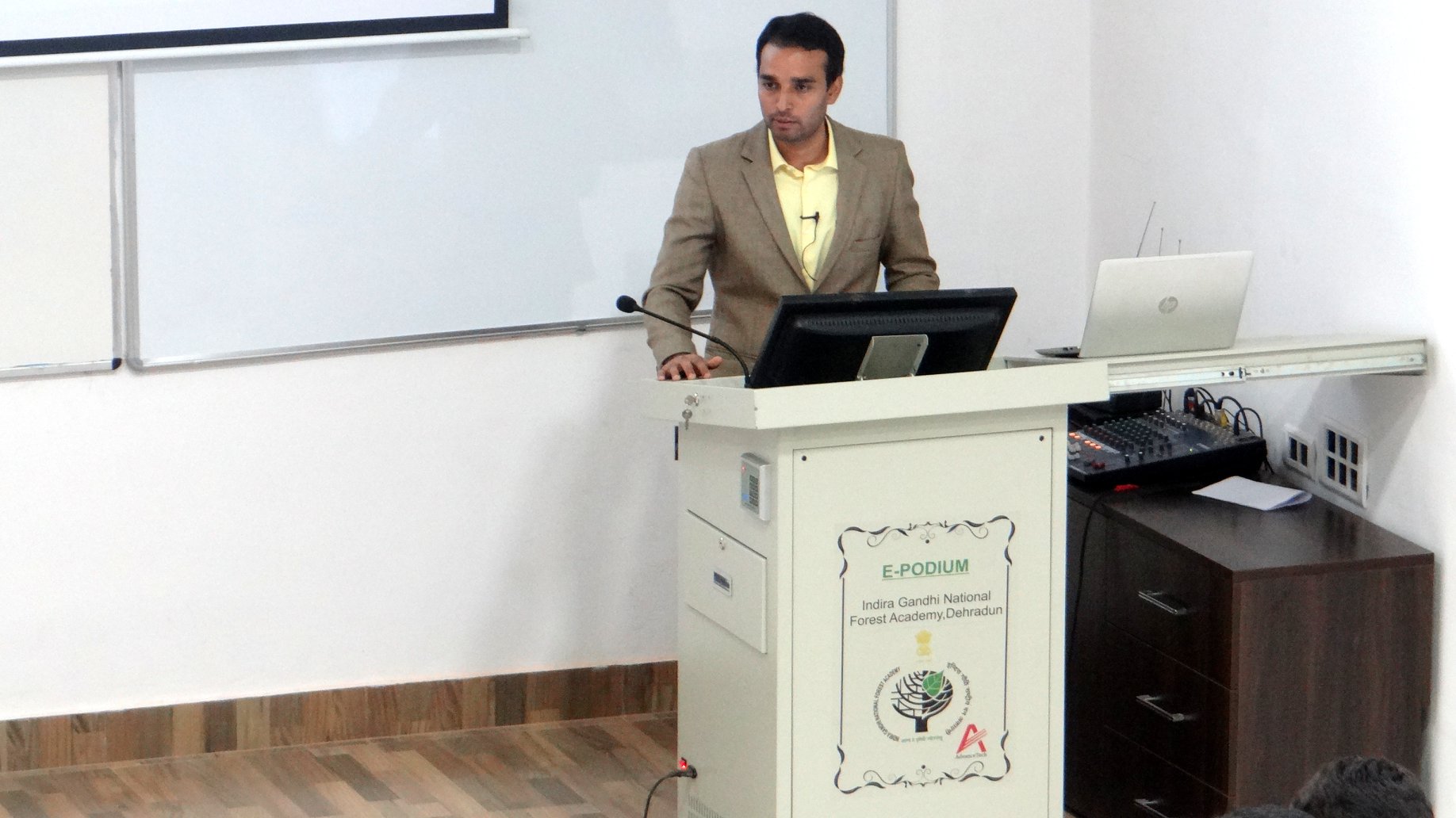
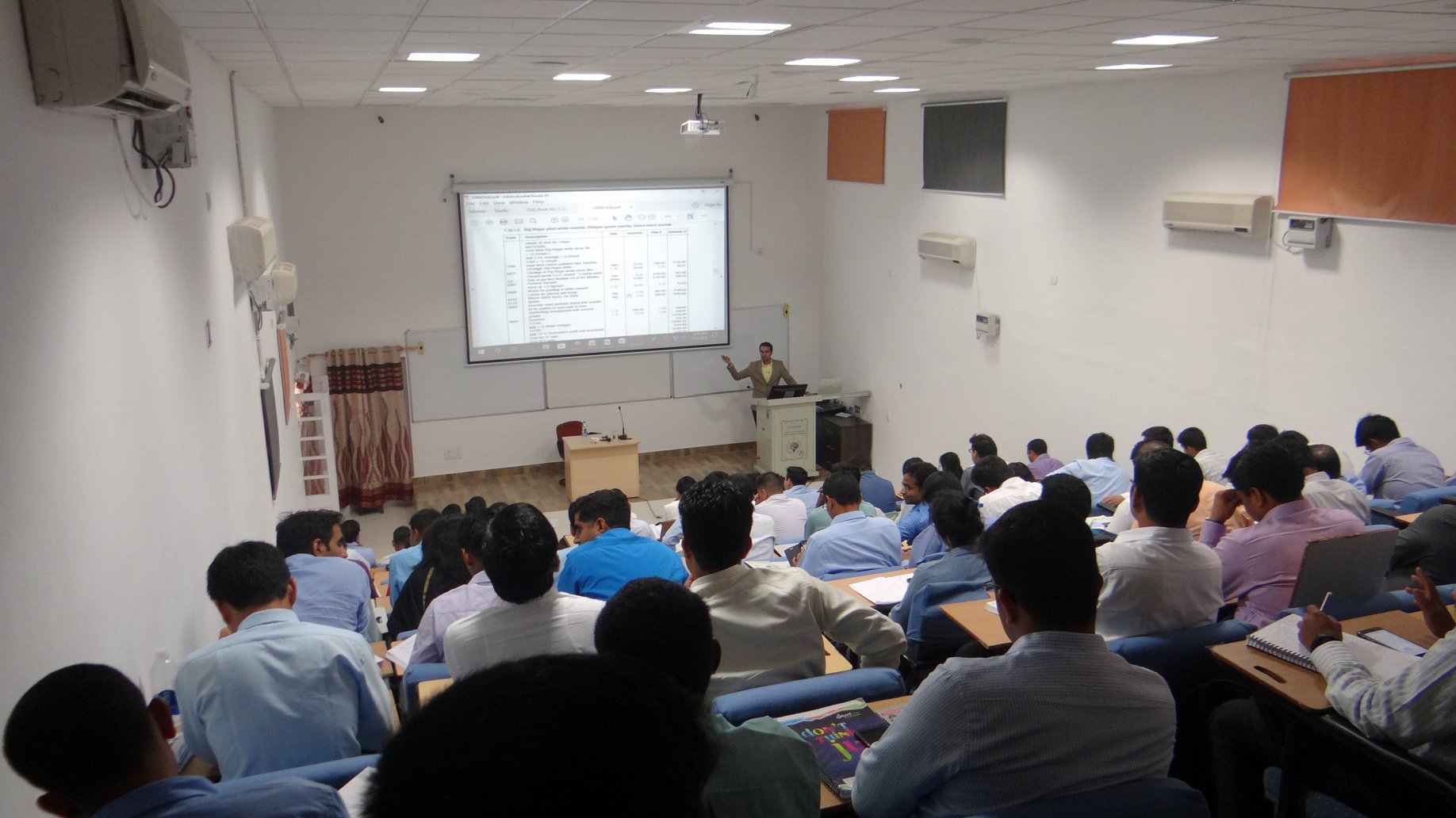
🎤 I am a guest faculty to newly inducted Indian Forest Service IFS Officers at Indira Gandhi National Forest Academy IGNFA at Forest Research Institute FRI, Dehradun
Teaching Forest Engineering to the batch of Indian Forest Services Officers (IFS) [above pics]
🎤 I am also a guest faculty to the newly inducted State Forest Services SFS officers at Central Academy for State Forest Service or CASFOS, Dehradun.
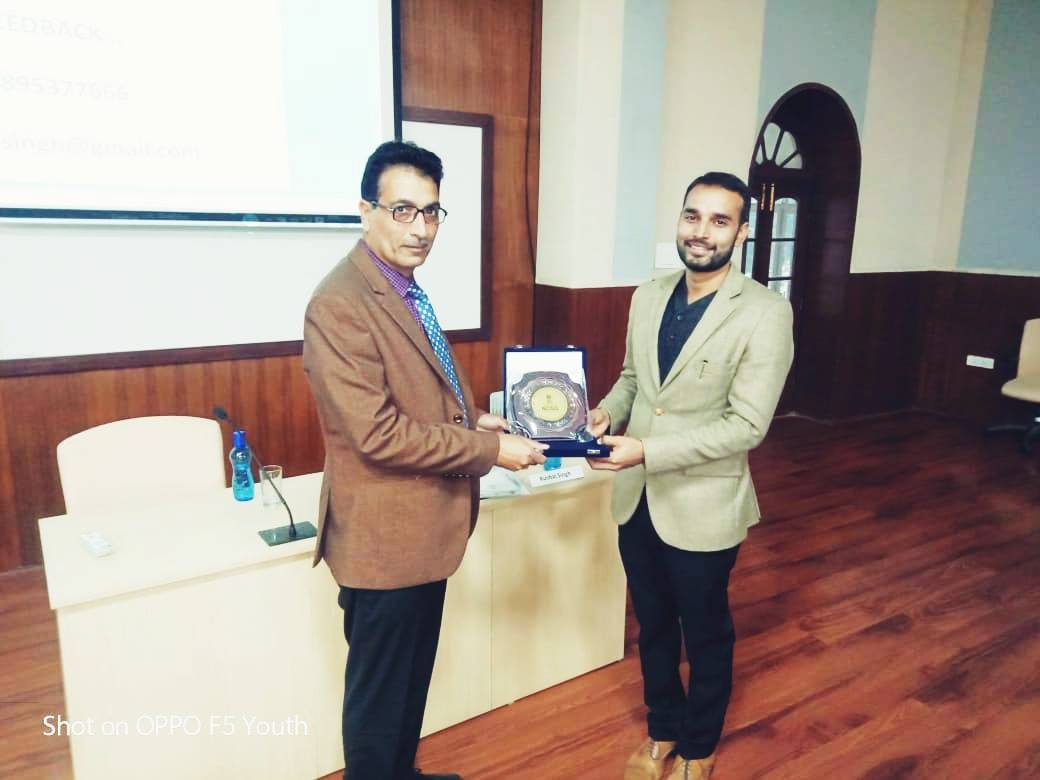
With the Principal, Course Director, and Students of Central Academy for State Forest Service (CASFOS) [above pic]
🎤 I have also served as a guest faculty at Lal Bahadur Shastri National Academy of Administration (LBSNAA) or more popularly known as IAS academy teaching different courses
With the Course Director and LBSNAA for taking a Guest Lecture on New Technologies in Civil Engineering [above pic]
Apart from all the academics, I have 02 YouTube channels that I run and manage.
One is called "Civil Black Box" which is aimed at providing quality education to Civil Engineering students and the other is "The Binary IQ" which is aimed to increase awareness of software, technology, and productivity in general.